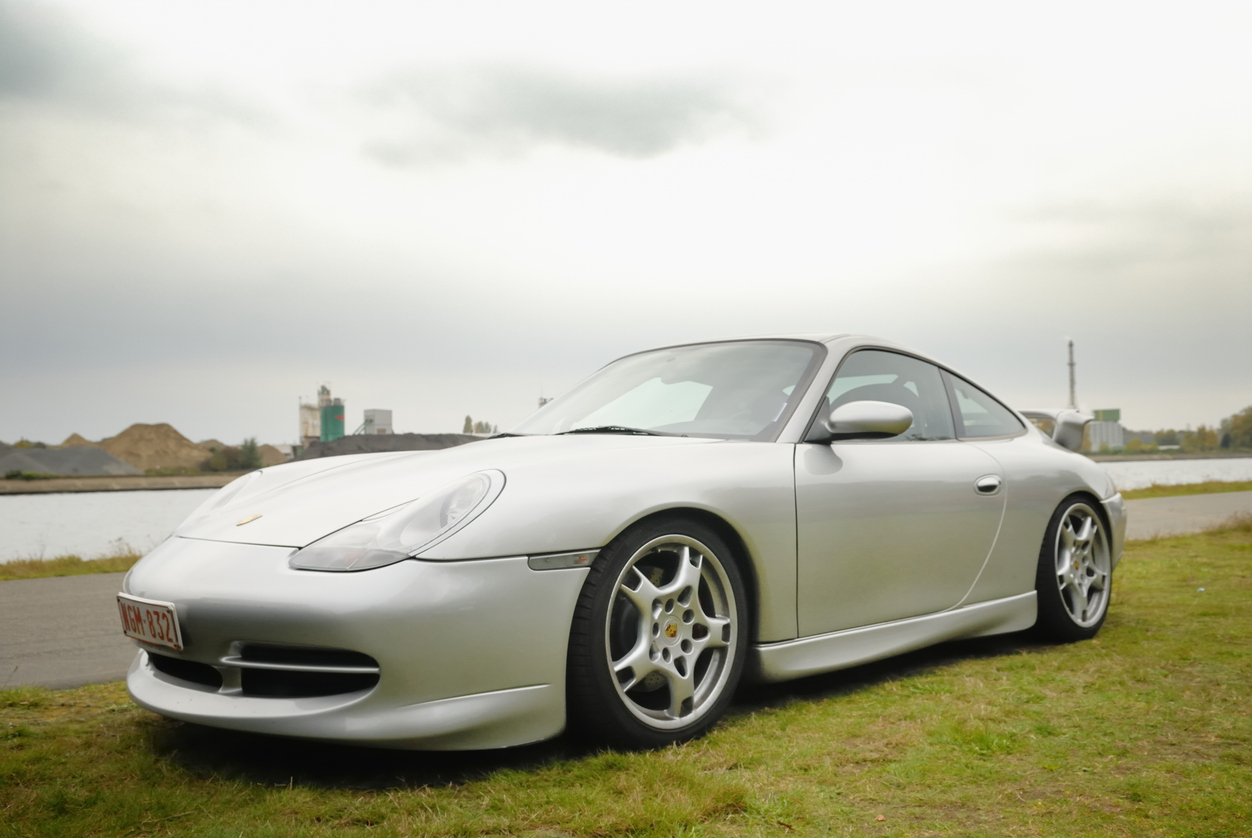
Porsche 996 Buyer's Guide (1999–2005)
The first water-cooled 911 is now a cult classic and one of the best performance-per-dollar values on the used market — but only if you do your homework on the IMS bearing.
Overview
The 996 generation, produced from 1999 to 2005, marked a watershed moment in Porsche history: the transition from air-cooled to water-cooled engines. Sharing its front end and engine with the Boxster, the 996 was initially controversial among Porsche purists — the "fried egg" headlights and shared components were seen as cost-cutting moves. Time has been kind to it. Today the 996 is rightly celebrated as an incredible driver's car that delivers genuine 911 performance at prices a fraction of its successors.
The base Carrera uses the M96 engine — a 3.4-liter (early) or 3.6-liter (late) horizontally-opposed flat-six producing 296–320 hp. The chassis is balanced, the steering is communicative, and the driving experience is pure 911. For buyers who understand the known issues and do proper due diligence, the 996 represents one of the most compelling value propositions in the used sports car market.
The IMS / RMS Issue
The intermediate shaft (IMS) bearing is the single most-discussed topic in 996 ownership, and for good reason. The IMS is a shaft that drives the camshafts via a chain, and in the M96/M97 engines it is supported by a small sealed ball bearing that can fail. When it fails, it can send metal debris throughout the engine, causing catastrophic — and expensive — destruction. Rebuilds or replacements can easily run $20,000 or more.
What Is the Failure Rate?
Estimates vary, but the most commonly cited lifetime failure rate is approximately 1–5%. That sounds low, but it is dramatically higher than other bearings, and the consequences are total engine loss. The failure mode is often sudden with little warning. Some owners report hearing a rattle or seeing metal particles in the oil filter before failure, but many get no warning at all.
Single-Row vs. Dual-Row Bearing
Early M96 engines (approximately 1997–2000 in Boxsters, and 1999–2000 in 996s) used a dual-row IMS bearing, which some consider slightly more robust than the single-row bearing introduced later. However, both designs can fail and both benefit from the retrofit. The single-row bearing is considered slightly higher risk by most specialists.
The Solution: LN Engineering IMS Retrofit
LN Engineering developed the IMS retrofit — a solution that replaces the problematic sealed bearing with a larger, open bearing fed by pressurized engine oil. When performed as part of a clutch job (since the transmission must come out anyway), total cost is typically around $2,000–$2,800 installed at a reputable independent Porsche shop. This is widely considered mandatory maintenance before purchasing any M96-engined car.
The rear main seal (RMS) is another common concern — it is a rubber seal at the rear of the engine that can weep oil over time. Again, it is most economically addressed during a clutch job when the transmission is already out.
Mezger Engine Variants — No IMS Risk
Several 996 variants use the entirely different Mezger engine, derived from the 911 GT1 race car. The Mezger engine has a dry-sump lubrication system and does not use the IMS bearing found in the M96. These cars carry no IMS risk whatsoever:
996 GT3 (2004–2005 in US)
The 996 GT3 uses the 3.6-liter Mezger flat-six producing 381 hp at 7,400 rpm. With a six-speed manual as the only transmission option, it is a hand-built, track-ready machine. The GT3 is the purist's choice in the 996 lineup and values have held strong accordingly.
996 GT3 RS
A more focused, lighter version of the GT3 with a rear wing, stripped interior, and roll cage preparation. Not officially imported to the US market, but grey-market examples exist. Values are strong and climbing.
996 Turbo (2001–2005)
The 996 Turbo uses the 3.6-liter twin-turbocharged Mezger engine producing 415 hp (420 hp for the Turbo S). All-wheel drive, wider body, and performance that still embarrasses modern sports cars. The Turbo is the sleeper choice in the 996 lineup — undervalued relative to its performance and Mezger reliability.
996 GT2 (2002–2005)
The ultimate widowmaker. A rear-wheel-drive 996 Turbo with the boost turned up to 462 hp and no electronic safety nets. Mezger engine, no IMS risk. Values reflect its raw, uncompromising character. Not for inexperienced drivers.
Key Things to Inspect
Whether buying from a dealer or private party, a pre-purchase inspection (PPI) by an independent Porsche specialist is non-negotiable. Here is what to focus on:
- IMS/RMS documentation: Ask specifically for a receipt or service record showing the IMS retrofit was performed, who did it, and the mileage at which it was done.
- Coolant condition: Pull the coolant reservoir and look at the color. Porsche's coolant should appear pink or orange (Zerex G05). If it is rusty brown or murky, the cooling system has been neglected and may have corrosion in the heat exchangers — expensive to address.
- Air-oil separator (AOS): The AOS separates oil vapor from crankcase gases. When it fails, oil is ingested into the intake, causing oil consumption and potential issues. Signs include blue smoke, oil pooling in the intake, or oily residue around the vacuum lines.
- Brake fluid: Brake fluid absorbs moisture over time and should be flushed every two years. Old fluid is a maintenance indicator — ask when it was last changed.
- Service history: A complete service record from a Porsche dealer or reputable independent shop significantly increases confidence. Cars without documentation are higher risk.
- Oil leaks: Put the car on a lift and look carefully at the engine and transmission for leaks. Some seepage is normal on older cars, but active dripping indicates issues.
- Compression and leakdown test: A specialist can perform these tests to evaluate cylinder health. Significant variation between cylinders is a red flag.
Model Variants and Prices
The 996 lineup spans a wide range of variants and values. Prices below reflect approximate retail market conditions as of 2024–2025:
| Model | Years | Engine | IMS Risk | Price Range |
|---|---|---|---|---|
| Carrera (C2) | 1999–2005 | M96, 3.4/3.6L, 296–320 hp | Yes | $18,000–$35,000 |
| Carrera S (C2S) | 2002–2005 | M96, 3.6L, 320 hp | Yes | $20,000–$36,000 |
| Carrera 4 / 4S | 2001–2005 | M96, 3.6L, 320 hp | Yes | $20,000–$38,000 |
| Turbo | 2001–2005 | Mezger, 3.6L TT, 415 hp | No | $40,000–$75,000 |
| GT3 | 2004–2005 | Mezger, 3.6L, 381 hp | No | $65,000–$120,000 |
| GT3 RS | 2004–2005 | Mezger, 3.6L, 381 hp | No | $90,000–$150,000 |
| GT2 | 2002–2005 | Mezger, 3.6L TT, 462 hp | No | $90,000–$150,000 |
Best Value Picks
If you are looking for the best combination of value, driving experience, and manageable ownership risk in the 996 lineup, consider the following:
2002+ Carrera C2 Manual, IMS Already Done
A 2002 or later C2 (non-Turbo, rear-wheel drive) with a six-speed manual gearbox, IMS retrofit already completed, and a clean service history is the sweet spot for most buyers. The later 3.6-liter engine is the final development of the M96 and has the most refinement. Prices in the $22,000–$30,000 range for a good example represent exceptional value for 300+ horsepower, genuine 911 sports car ownership.
996 Turbo with Service History
For buyers with a larger budget, a well-documented 996 Turbo is one of the best performance bargains available. The Mezger engine eliminates IMS worry, the AWD system is genuinely useful, and the performance is astonishing. A clean, serviced example at $50,000–$65,000 is a compelling buy versus a 997 at significantly higher prices.
Ready to start shopping? Browse current 996 listings from Carvana, BaT, Cars & Bids, and more — scored for deal quality.
Browse 996 Listings →Buyer's Toolkit
Tools and supplies every Porsche buyer should have — before the purchase and after.
As an Amazon Associate, FlatSixFinder earns from qualifying purchases.